Introducing a series of occasional blogs in which we highlight a growing project that we find inspiring.......
We are introducing a series of occasional blogs that we are calling ‘Inspired By Others’. In each blog we will talk about a particular growing project that we find inspiring.
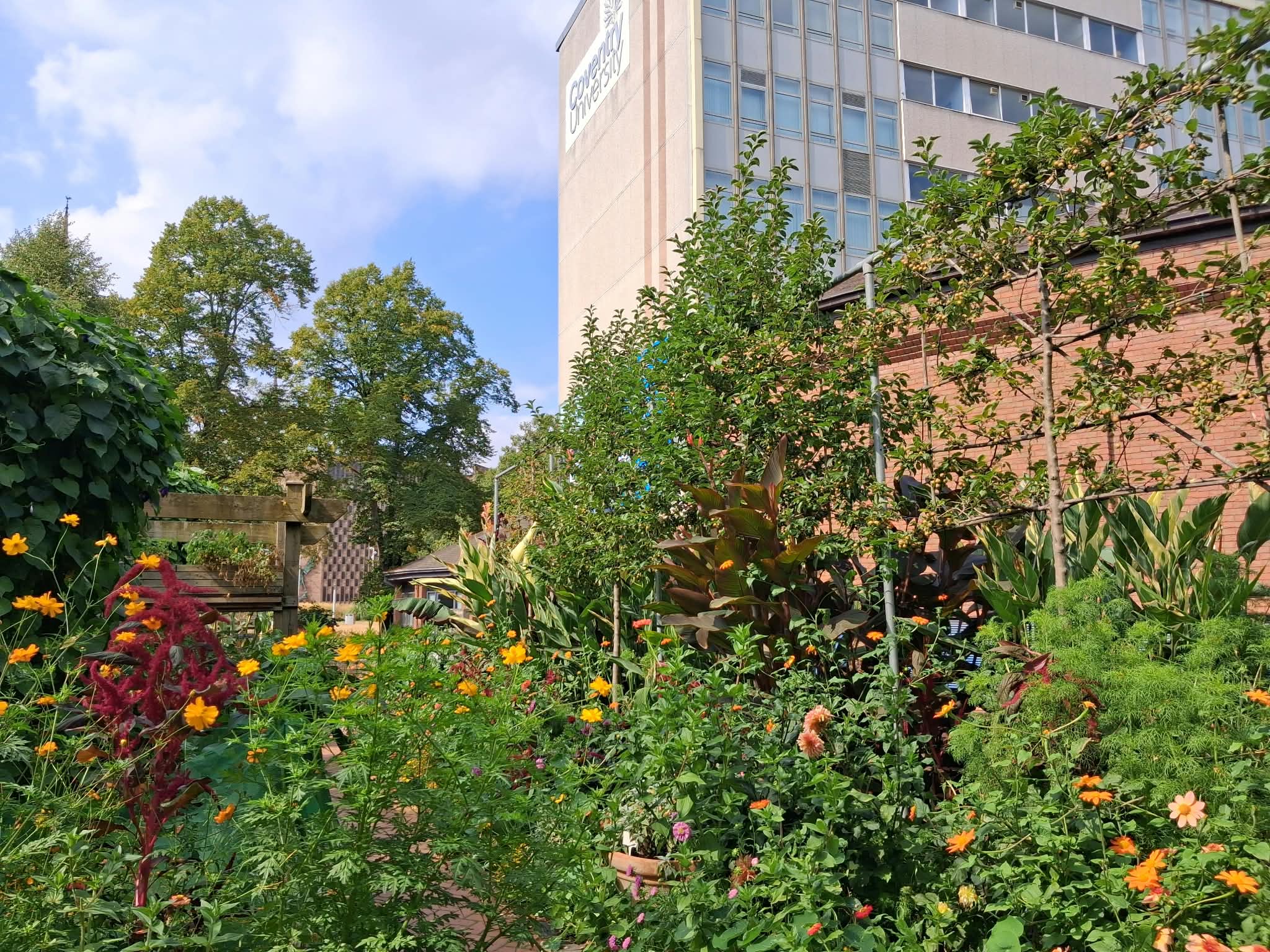
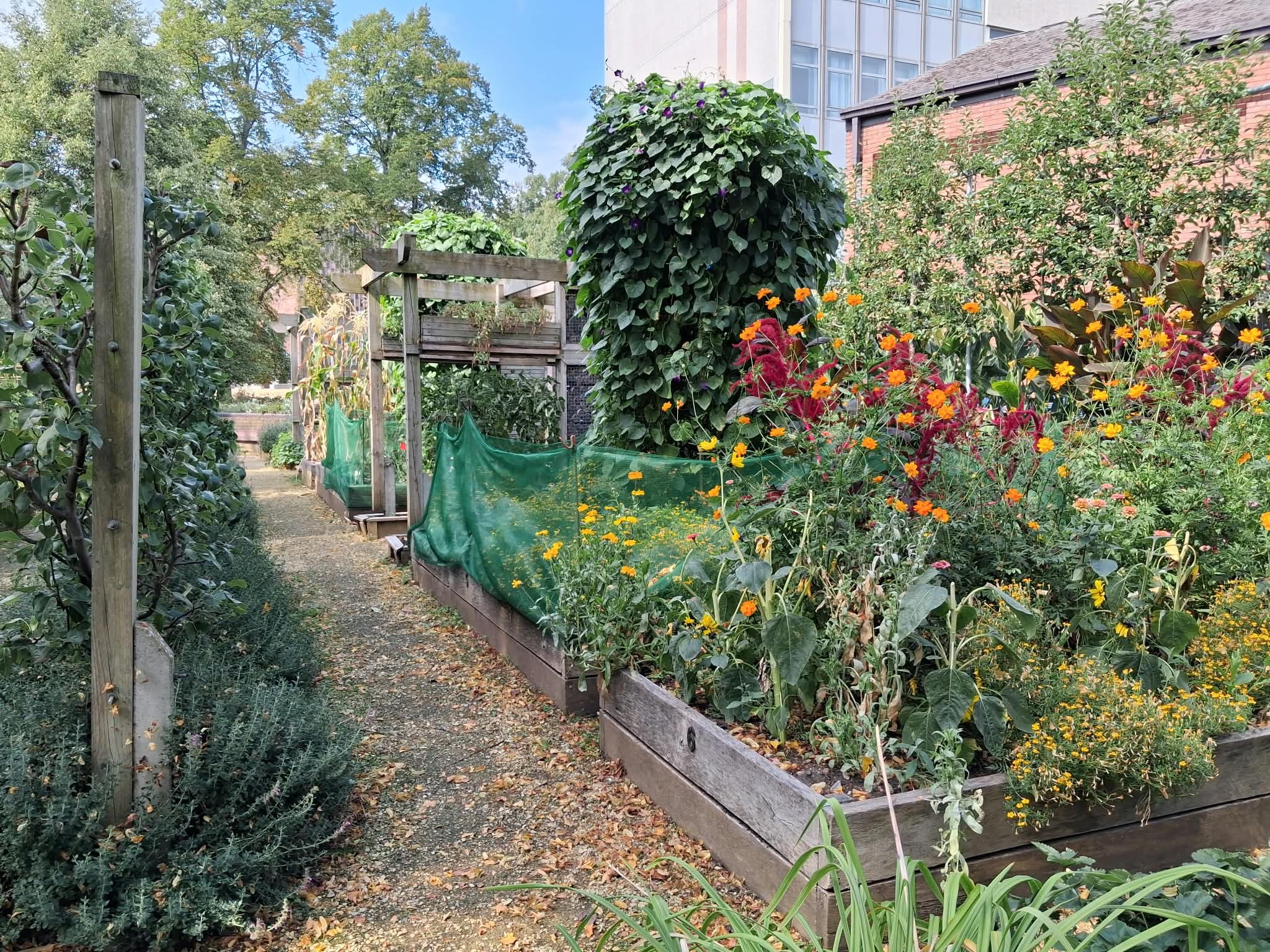
Coventry University’s Edible Garden is in the heart of the city, a stone’s throw from the ruins of the old Cathedral that was bombed in November 1940 and is now a place of remembrance and reconciliation.
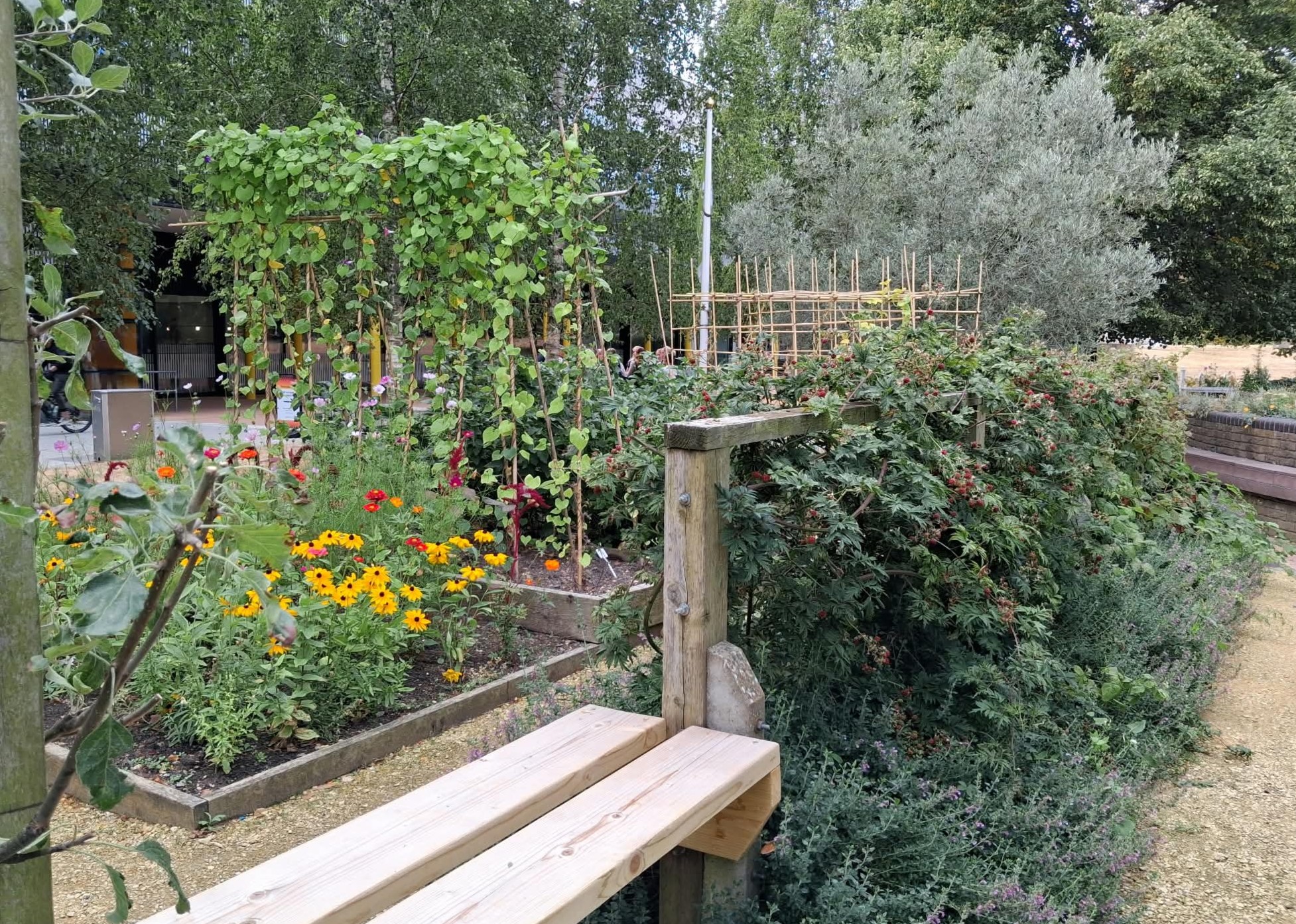
Amidst the concrete and glass of the surrounding buildings, the garden is a hub for bees and other pollinators, and a place to sit and relax. In addition, visitors can harvest herbs and ripe fruit and vegetables to eat then or later.
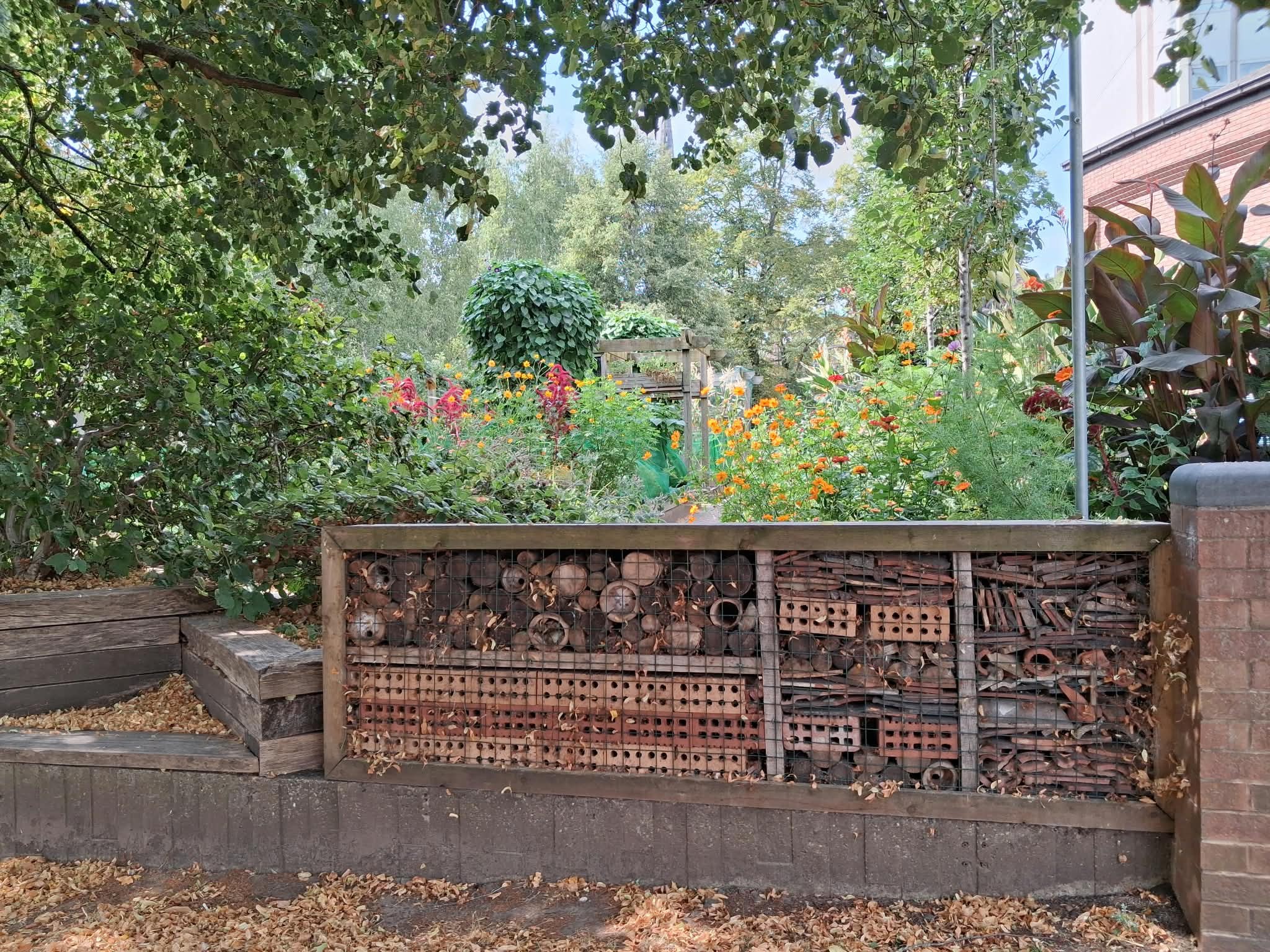
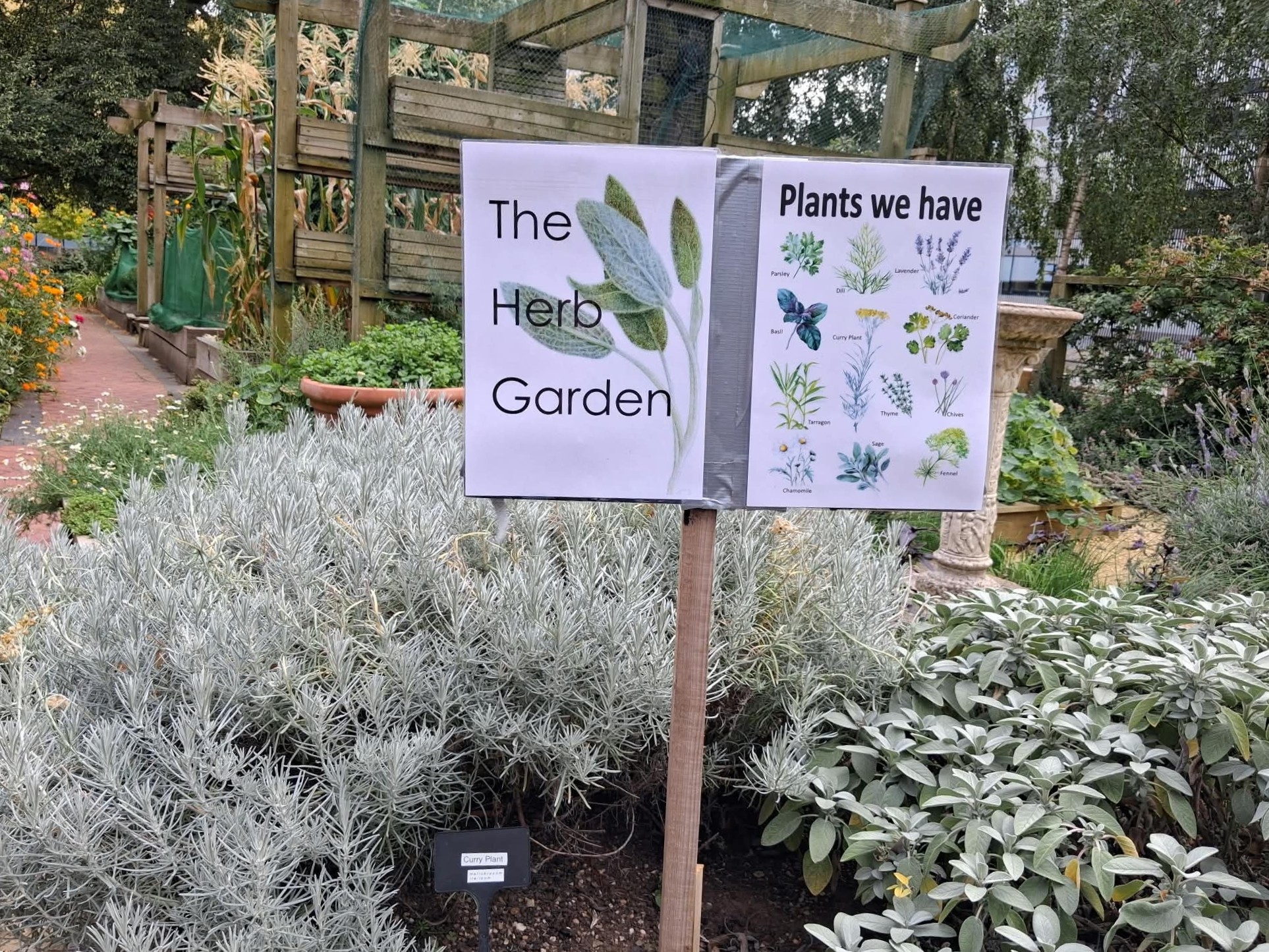
The garden began almost 20 years ago when one raised bed that was normally planted with seasonal flowers for display was planted with courgettes. This simple act generated so much interest that by 2008 the University Garden Team decided to fully develop an ‘edible garden’. This was increased in size in 2012 and 2017, and now has over 20 raised beds. When one of us visited in late August this year there was a great variety of produce growing, including dwarf and climbing beans, chard, broccoli, squash, sweet corn, carrots, beetroot, apples and pears (and much more). There was also a beautiful herb garden, lots of flowers for pollinators, and several large ‘bug hotels’.
There is a notice board for visitors, showing what crops are planted where. Crops that are ready to harvest have a green flag next to them, and those not ready have a red flag. There is seating in the herb garden, a place where some people were eating lunch, and others were simply enjoying some peace amongst nature.
Clearly, maintaining an edible garden like this requires regular tending, seedlings for the vegetables, a source of compost to maintain soil fertility, and a source of water. Seedlings and compost are produced by the University Garden Team, and the water source appears to be a tap next to the garden.
This was a lovely, peaceful, place to visit. It is a great example of how a garden in the middle of a city can provide benefits for biodiversity, for mental health, and provide fresh herbs, fruit and vegetables towards a healthy diet.
Sources: visit by Nigel in August 2026; additional information from Coventry University’s Website and article in Turfpro.co.uk 22nd July 2019.