A tough time for brassicas!
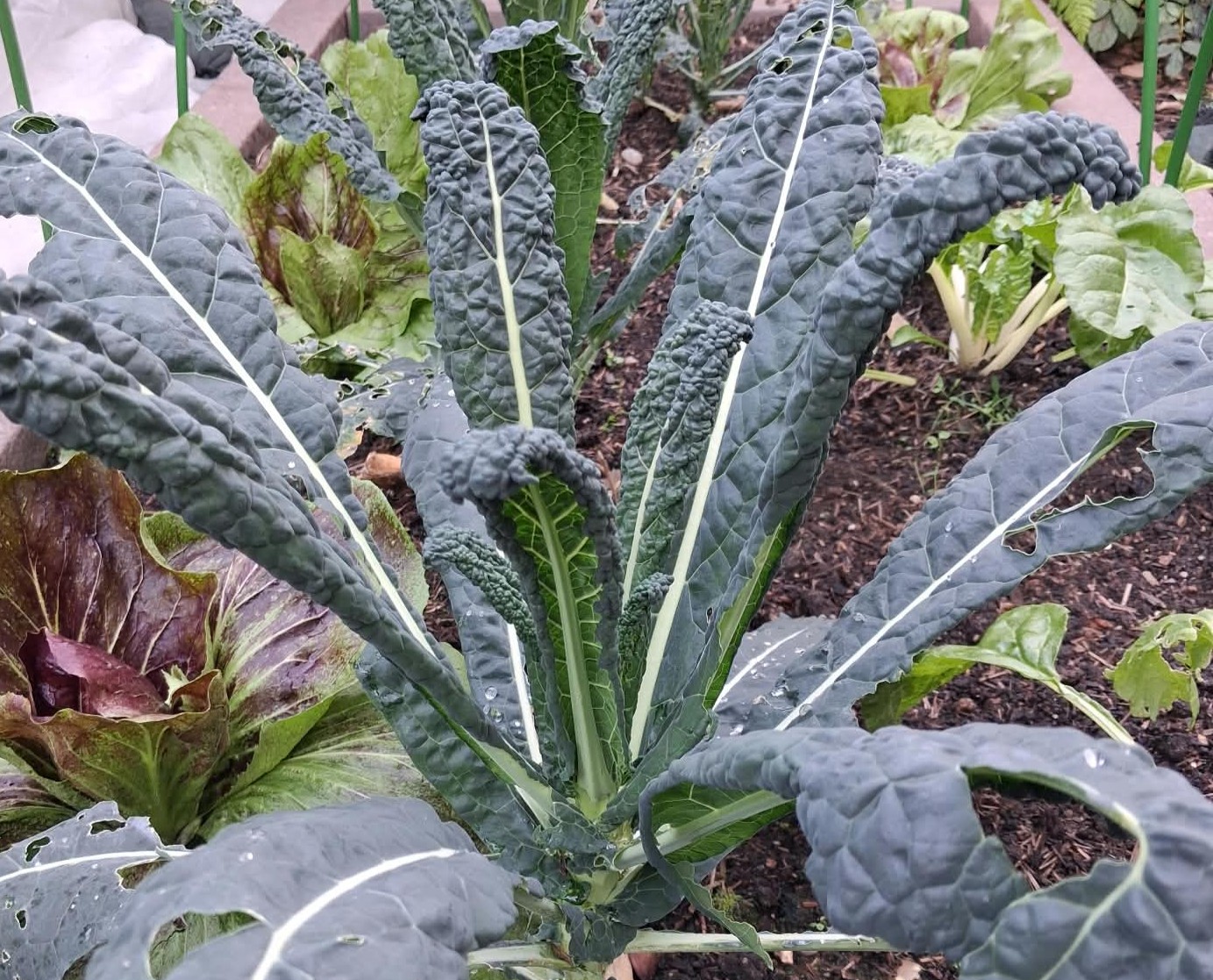
Mostly, this month has been all about keeping on top of weeds, losing brassicas to slugs and caterpillars despite my efforts to protect the plants.
This year has been very difficult for our poor old brassica family. The Brassicaceae family includes kale (e.g. the cavelo nero in the picture), sprouts, cabbage, broccoli, cauliflower, turnips and radish. All of these have been devastated by pests and drought this year.
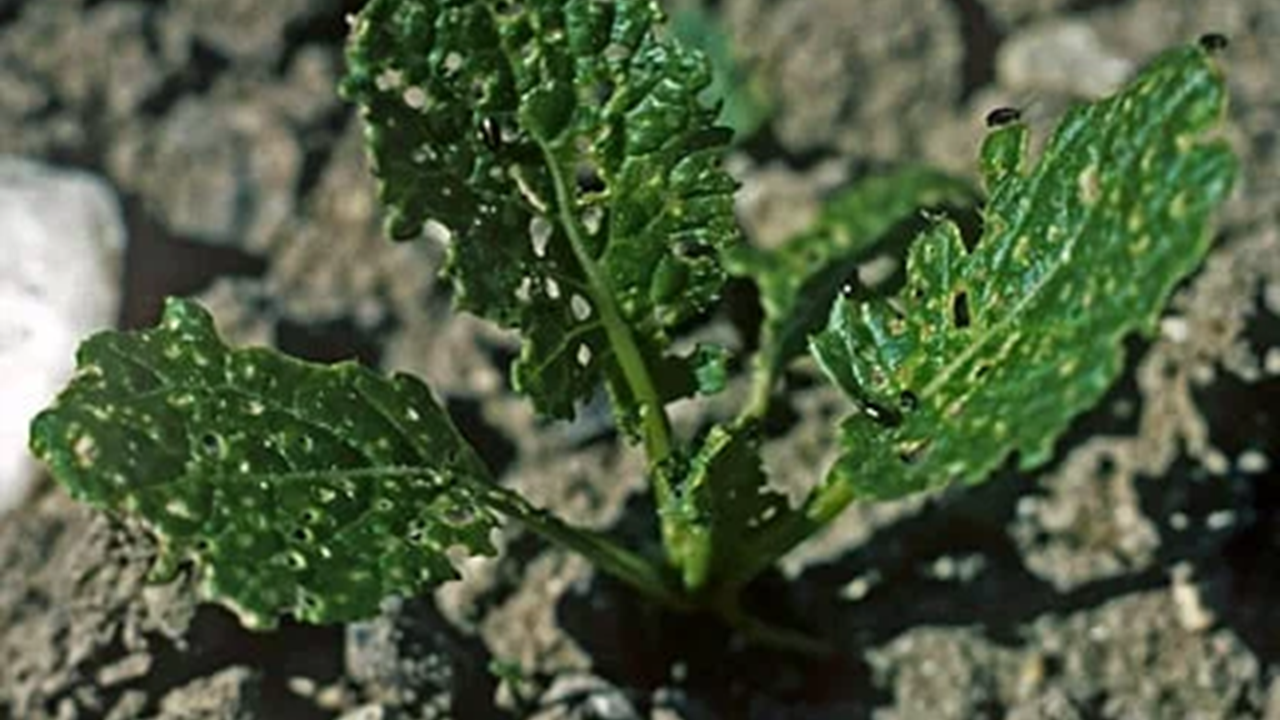
The worst culprit has been the flea beetle, a tiny beetle around 1.5 - 2 mm in size. The most prolific member of the family is the cabbage stem flea beetle. Usually, they don’t cause much damage; often, you see their damage before you see them, which is characterised by tiny circular holes in young leaves. Normally, the plant can grow past this, and then the leaves become too tough for the beetle to eat; however, in large numbers they can be devastating, as the holes become so numerous the leaf can't photosynthesise enough and produce the sugars the plant needs for new growth.
Flea Beetles are black in colour and have powerful long back legs that they use to spring from leaf to leaf or further into the undergrowth when they feel threatened. This behaviour makes them hard to control and leads to their name. The second photo shows flea beetles on a brassica seedling, showing holes that they have eaten in the young leaves.
Organic controls for reducing their damage usually include covering with insect mesh, sticky traps, organic bug sprays and nematodes. Personally, I prefer to use insect mesh; however, unfortunately, this year they managed to find ways in, probably during days when I was watering with the covers off, which is usually not a problem (noted for next year). Sticky traps and bug sprays work, but they are indiscriminate and also kill beneficial predators like ladybirds and parasitic wasps. Nematodes are mainly tiny thread-like creatures which, in general, are too small to be seen without a microscope and can be tricky to maintain in garden soil as they need the correct soil conditions to thrive. I’m saddened and also quietly relieved that other growers across the UK have also had major problems with this amazing but devastating life form and that it hasn’t just been me.
As I write this, we are gearing up for our inaugural harvest feast in collaboration with Truro Norish Hub at the Moresk Centre, where we will be using some of the harvest from our gardens. We have already started to process the tomatoes, courgettes and aubergines; these have been roasted, whizzed up and sieved to remove pips and seeds and will be used as a tomato-based sauce for a hearty harvest stew. Other produce from the gardens will be potatoes, garlic, summer squash, chard, beetroot, green onions, plus some salad leaves and fresh herbs; additional produce will be purchased from local market garden suppliers.
If you would like to join us and haven’t booked a seat yet, just go to the events menu above. The final day for booking will be October 2nd; we would love to see you there.
Last Friday, Sarah and I were invited to an interview with Dan Pascoe at BBC Radio Cornwall as part of their community takeover slot.
Sarah and I were both a tad nervous, to say the least; however, Dan and Meah, the producer of the show, made us feel very welcome and at ease throughout. It was very short and sweet, and I feel I could have waffled on for ages. If you would like to hear our brief brush with the celebrity lifestyle, follow the link below; the interview starts around the 47min mark